Horse Barn Floor Plans – Essential Features for Your Equine Space
Designing the perfect horse barn is more than creating a shelter—it’s about building a comfortable, efficient, and safe environment for your horses. Well-thought-out horse barn floor plans can improve animal welfare, streamline daily chores, and enhance the overall look of your property. Whether you are constructing a small two-stall barn or a large equestrian facility, the right floor plan ensures your space functions smoothly for both horses and caretakers. In this guide, we’ll explore the essential features that make up great horse barn floor plans, practical design tips, and the must-have elements for safety, comfort, and convenience.
Understanding Horse Barn Floor Plans
A well-designed horse barn floor plan considers the flow of movement—for both humans and horses. It optimizes space by aligning stalls, aisles, tack rooms, and wash bays in a logical manner. The best plans balance functionality and aesthetics while meeting the needs of different horse breeds and barn sizes. Depending on your goals, a floor plan can range from a simple shed-row barn to an elaborate center-aisle design with storage, offices, and living quarters. Every detail counts, from stall size to ventilation and access to paddocks.
Key Considerations Before Designing
Before finalizing your barn design, it’s important to assess several key factors. First, consider your number of horses and future expansion plans. A barn that feels spacious today may quickly become cramped if you add more horses later. Next, think about site orientation and drainage. The barn should sit on slightly elevated ground to prevent flooding and face prevailing winds for natural ventilation. Access to utilities like water and electricity is another must. Lastly, design for efficiency—minimize walking distance between stalls, storage, and turnout areas.
Essential Features of Horse Barn Floor Plans
Stall Design and Placement
Stalls are the heart of any horse barn. Each stall should provide adequate space for comfort and safety. The recommended stall size for an average horse is 12×12 feet, though larger breeds may need more room. Good stall placement allows for easy cleaning, feeding, and access. Using sliding doors instead of swinging ones saves aisle space and reduces hazards. Additionally, install windows or grills for natural light and airflow.
Aisle Width and Layout
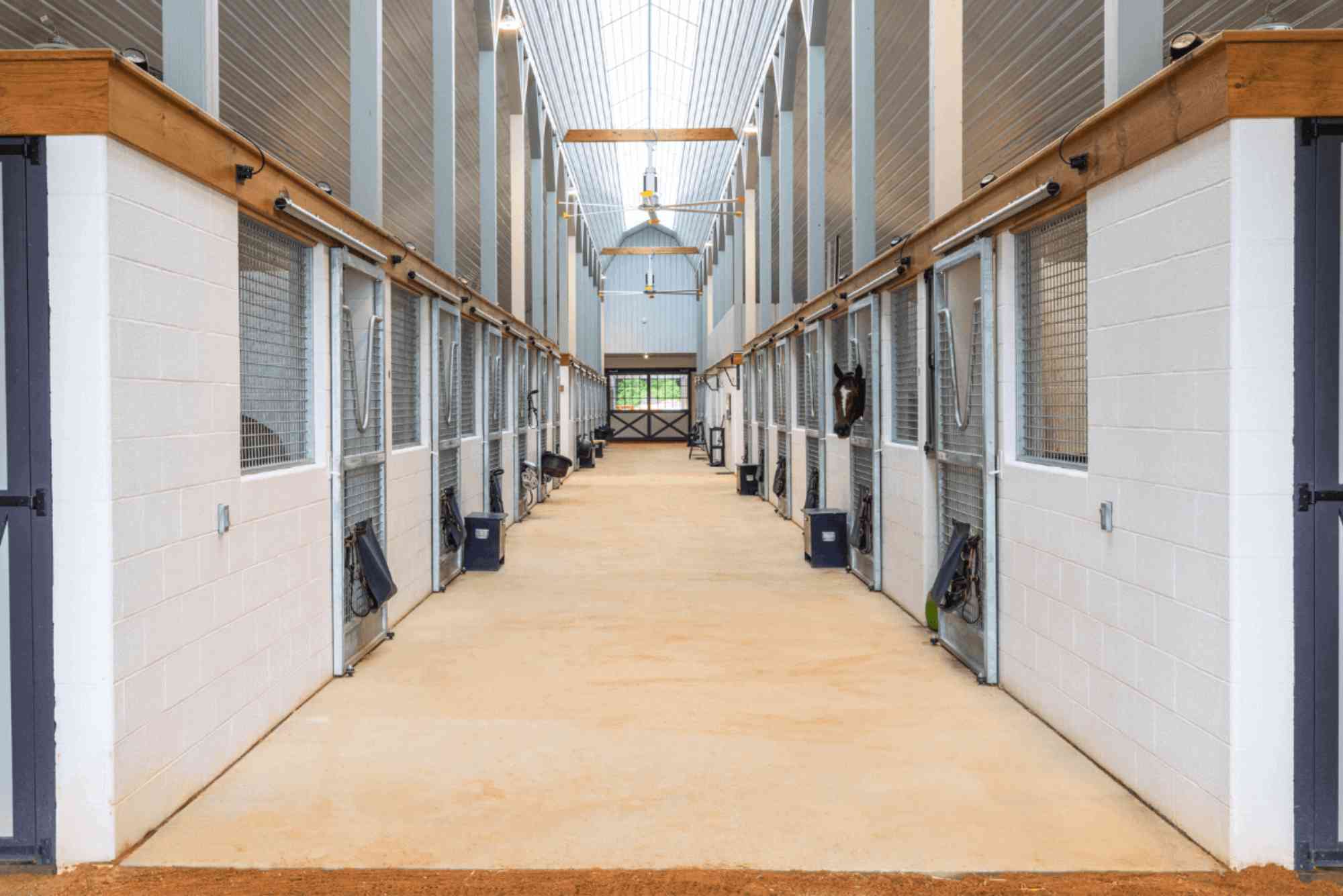
The aisle is the main traffic lane in your barn, so its width is crucial. Aisles should be at least 12 feet wide to allow safe movement for horses and handlers. Wider aisles enhance ventilation and reduce stress when multiple horses are being handled at once. The layout—whether it’s a center aisle, L-shaped, or U-shaped—affects how efficiently the barn functions. Center-aisle designs are particularly popular because they allow for easy supervision and airflow.
Ventilation and Lighting
Proper ventilation is one of the most important design aspects. Horses produce heat and moisture, so a stuffy barn can lead to respiratory problems. Include ridge vents, cupolas, and side vents to promote air circulation. Natural light through windows and skylights creates a healthy environment and reduces electricity costs. Complement natural lighting with LED fixtures for efficiency and safety during nighttime care.

Flooring and Drainage Solutions
The right flooring contributes to the safety and hygiene of your horses. Stall floors should provide traction, absorb shock, and drain efficiently. Common choices include rubber mats, compacted gravel, or interlocking pavers. For wash bays and aisles, ensure proper drainage slopes to avoid puddling. A clean, dry barn minimizes slipping hazards and keeps hoof health in check.
Tack and Feed Rooms
Dedicated tack and feed rooms keep your barn organized and your horses’ diet consistent. A tack room should be dry, secure, and large enough for saddles, bridles, and grooming equipment. Adding temperature control helps protect leather tack. The feed room, on the other hand, should be rodent-proof and located near stalls for convenience. Installing sealed containers and labeled bins simplifies daily routines.
Wash and Grooming Bays
Every modern horse barn floor plan should include a wash or grooming bay. These areas should have non-slip floors, good drainage, and hot and cold water access. Proper lighting is also essential for safety and precision during grooming or veterinary care. Many owners add cross-ties and wall hooks for equipment organization.
Storage and Utility Areas
Hay, bedding, and tools need dedicated storage areas to prevent clutter and fire hazards. Plan for a separate hay loft or storage room away from open flames or electrical panels. Incorporate utility rooms for maintenance tools, cleaning supplies, and spare equipment. A well-planned storage system saves time and reduces stress.
Safety Features
Safety should always be at the forefront of any barn design. Smooth surfaces, rounded corners, and kick-resistant materials minimize injuries. Include wide exits and sliding stall doors for quick evacuation during emergencies. Fire prevention systems such as extinguishers, smoke detectors, and lightning rods provide additional security. Using non-toxic finishes and proper insulation enhances comfort and safety year-round.
Types of Horse Barn Floor Plans
Center Aisle Barns
This is one of the most popular layouts, featuring stalls on both sides of a central walkway. It offers easy access, good ventilation, and efficient workflow. These barns can also accommodate wash bays, tack rooms, and feed storage within the same structure.
Shed Row Barns
Ideal for warmer climates, shed row barns have stalls arranged in a single row with doors opening to the outside. This design allows maximum ventilation and sunlight. It’s also easy to expand or customize over time.
L-Shaped or U-Shaped Barns
These designs offer flexible space usage, making it easier to separate different functions—like living quarters, storage, and stalls. They also provide good protection from wind and weather when designed strategically.
Monitor or Raised Center Aisle Barns
Monitor-style barns feature a raised roof section with clerestory windows, allowing superior ventilation and light. They are perfect for large facilities that need to manage air quality for multiple horses.
Gambrel or Loft Barns
Gambrel barns feature a traditional barn roofline with ample overhead space, often used for hay storage or even living quarters. These barns combine practicality with classic rural aesthetics.
Enhancing Functionality and Comfort
Modern barn floor plans can integrate luxury and technology without compromising practicality. Features like automatic waterers, climate control systems, and solar-powered lighting can significantly improve efficiency. Adding rubber pavers, soundproofing, and insect screens enhances comfort for both horses and humans. Many owners now include lounge spaces, offices, or even small apartments to create a full-service equestrian facility.
Common Mistakes to Avoid
Avoid cramming too many stalls into a small footprint—crowded barns can lead to stress and injuries. Don’t neglect ventilation, as poor air circulation can cause respiratory diseases. Insufficient storage or awkwardly placed tack rooms create daily inconvenience. Always consult an equine architect or experienced builder to ensure proper design, structure, and safety standards.
The Role of Professional Planning
While DIY barn planning might seem appealing, professional expertise ensures that your barn meets all safety and zoning requirements. Architects specializing in equine structures can help design efficient, customized layouts based on your site and budget. They also understand the best materials and construction methods for durability, comfort, and hygiene.
Designing the perfect horse barn starts with thoughtful planning and attention to detail. The best horse barn floor plans balance comfort, safety, and efficiency for both horses and handlers. Every feature—from stall placement to ventilation and storage—contributes to the barn’s overall performance and longevity. Whether you choose a classic center-aisle barn or a modern monitor-style layout, your design should reflect your horses’ needs and your daily workflow. Ready to bring your dream barn to life? Consult an equine architect or barn designer today and create a space that truly works for you and your horses. Start planning your ideal horse barn today—combine function, safety, and elegance with expert-designed floor plans tailored to your equine lifestyle.
FAQs
What is the best layout for a horse barn?
The best layout depends on your needs, but center-aisle barns are often preferred for their efficiency and ventilation.
How big should a stall be for a horse?
A standard horse stall should measure at least 12×12 feet, but larger horses may need 14×14 feet for comfort.
How much space is needed for a 4-stall barn?
A 4-stall barn typically requires around 1,200 to 1,500 square feet, depending on aisle width and added rooms.
Do horse barns need windows?
Yes, windows improve airflow and natural lighting, creating a healthier environment for horses.
Can I add a loft to my horse barn?
Absolutely. A loft provides extra storage for hay or equipment, but ensure it’s designed for proper ventilation and load-bearing safety.
Related Reading: Two Story Home Floor Plans
Related Reading: Metricon Floor Plans