
“Gulliver’s Travels” is more than just a children’s adventure tale. Behind the fantastical islands and tiny people lies a biting satire on society, politics, science, and human nature. If you’ve only skimmed the surface of the Gulliver’s Travels wiki, you might have missed some of the book’s deeper meanings and obscure details.
In this article, we’ll dive into the surprising truths, hidden satire, and lesser-known insights about this 18th-century classic. From misunderstood metaphors to the political fire it once ignited, here’s what you didn’t know about Gulliver’s Travels.
The Real Author Behind the Adventure
Jonathan Swift: More Than a Novelist
Jonathan Swift wasn’t just a novelist. He was a clergyman, satirist, and political commentator. Born in Ireland, he used his pen to challenge authority and expose hypocrisy. Gulliver’s Travels was never intended as a lighthearted fantasy. It was a razor-sharp commentary on 18th-century British politics and human arrogance.
By publishing the book under the pseudonym “Lemuel Gulliver,” Swift added realism to the satire. Many readers originally thought it was a true account of voyages, which only made its criticisms more effective.
Beyond Lilliput: The Deeper Themes
Not Just Tiny People and Giants
Most readers remember the tiny Lilliputians or the giants of Brobdingnag. But each of the four voyages reflects different aspects of human society.
- Lilliput satirizes British politics, with thinly veiled references to the Whigs and Tories.
- Brobdingnag offers an outsider’s critique of European brutality.
- Laputa targets the impracticality of theoretical science and detached intellectualism.
- The Houyhnhnms present a mirror to humanity, asking whether humans are truly rational animals.
If you’ve only glanced at the Gulliver’s Travels wiki, these layers may not be immediately obvious. Swift embedded satire into every chapter, using absurdity to expose uncomfortable truths.

The Houyhnhnms: Humanity’s Harshest Mirror
Are We the Real Savages?
Perhaps the most unsettling part of the book is Gulliver’s encounter with the Houyhnhnms—intelligent horses who live by logic and harmony. Their contrast, the Yahoos, are dirty, aggressive, and ruled by base instincts.
This final voyage isn’t just fiction—it’s a deep philosophical question. Are humans more like the rational Houyhnhnms or the animalistic Yahoos?
By the end of the book, Gulliver is so disgusted by humans that he prefers horses over his family. It’s a jarring turn that many casual readers overlook.
Banned, Bowdlerized, and Misunderstood
Why Gulliver’s Travels Was Once Controversial
Despite its modern reputation as a children’s book, Gulliver’s Travels was once considered dangerous. Parts of it were censored or removed for being too critical of the church, monarchy, or scientific institutions.
In fact, the version many people know today has been softened from the original. Even the Gulliver’s Travels wiki may not emphasize how radical Swift’s critique was in its time.
This isn’t just a fantasy adventure—it’s a revolutionary satire that shook the foundations of 18th-century authority.
Real-Life Parallels in Gulliver’s World
Satire Inspired by True Events
Swift didn’t invent his targets out of thin air. His writing reflects real events and people:
- The war between Lilliput and Blefuscu mirrors the conflict between Britain and France.
- The petty squabbles over how to break an egg mock religious and political disputes.
- Laputa’s scientists are caricatures of the Royal Society’s obsession with impractical experiments.
These references gave Swift’s satire teeth, turning a fictional journey into a sharp political weapon.
Why the Ending Still Sparks Debate
Gulliver’s Mental Collapse
By the end of the book, Gulliver has completely lost faith in humanity. He isolates himself from people and talks to horses. This psychological breakdown is jarring, and it leaves readers with more questions than answers.
Was Swift suggesting that the pursuit of rationality strips away empathy? Or was he revealing the depth of human corruption? Scholars still debate the meaning, making it one of the most complex endings in English literature.
If you’re reading summaries on the Gulliver’s Travels wiki, you might not fully grasp the intensity of Gulliver’s final transformation.
Gulliver’s Travels in Pop Culture
How Modern Media Rewrites the Story
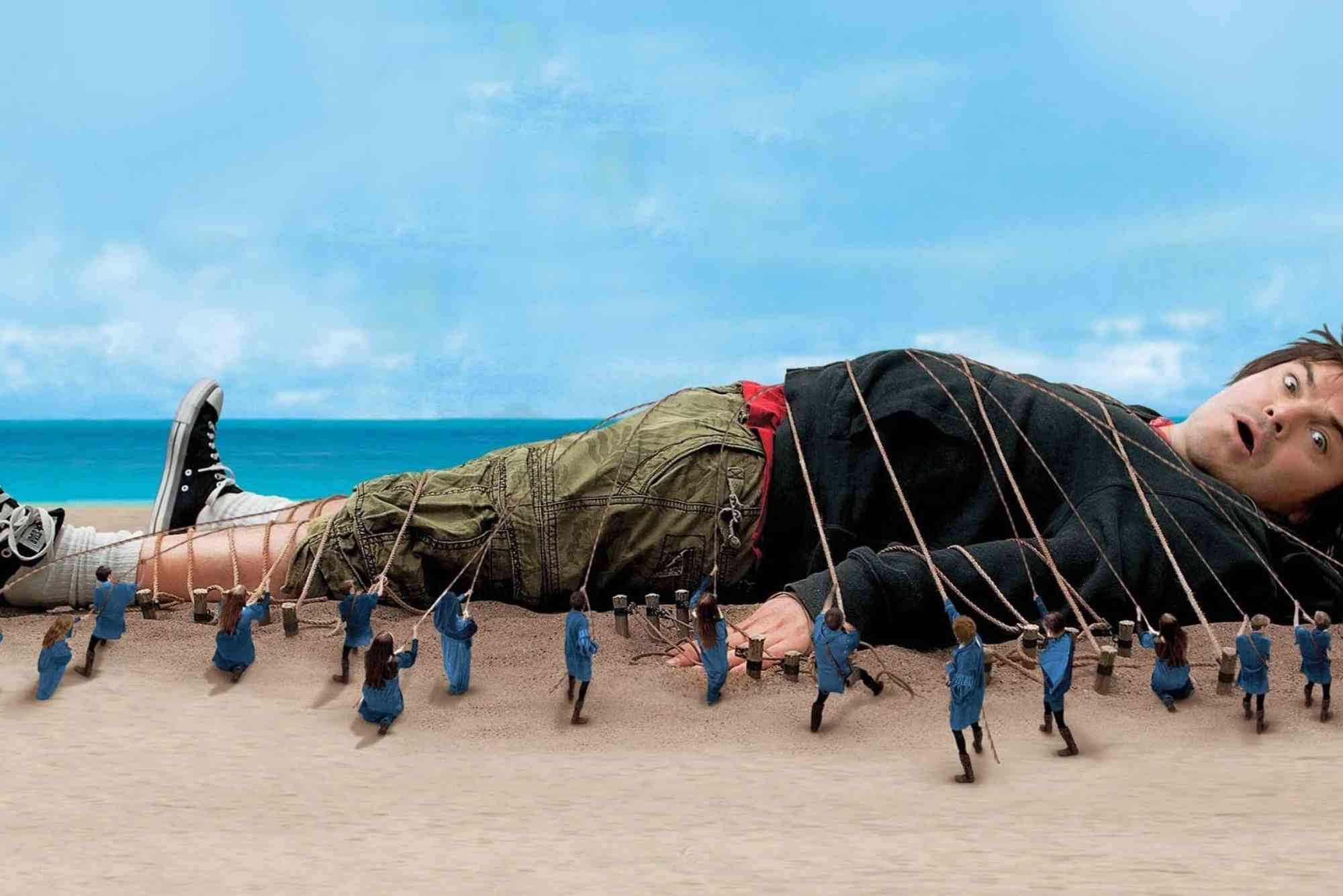
From animated series to Jack Black’s film adaptation, Gulliver’s Travels has been reshaped many times. Yet, most versions focus only on the Lilliputians and skip the darker elements.
These adaptations miss the philosophical and political critiques that define the original. While entertaining, they reduce the novel to a shallow fantasy.
Exploring the Gulliver’s Travels wiki is a great start—but digging into Swift’s real intentions reveals a much richer story.
Why Gulliver’s Travels Still Matters Today
Timeless Lessons in Human Nature
Even 300 years after publication, Gulliver’s Travels continues to resonate. Swift’s commentary on politics, science, and morality still applies in today’s world of misinformation, inequality, and blind nationalism.
Reading the novel today reminds us how literature can expose truths that are otherwise ignored. It’s not just a relic from the past—it’s a living critique of the world we live in.
FAQs about Gulliver’s Travels
What is the main message of Gulliver’s Travels?
Swift critiques human pride, political corruption, and blind trust in science and reason.
Is Gulliver’s Travels based on real events?
While fictional, many events and characters parody real political and scientific figures from Swift’s era.
Why is Gulliver’s Travels considered satire?
Swift uses exaggeration and absurdity to mock institutions, leaders, and societal values.
Who are the Houyhnhnms in Gulliver’s Travels?
They are rational horses that represent an ideal of reason and morality, contrasted with savage human-like Yahoos.
Is Gulliver’s Travels appropriate for children?
While often marketed to kids, its deeper themes are more suitable for mature readers.
Rethink What You Know About Gulliver
So next time you land on the Gulliver’s Travels wiki, remember—it’s just the tip of the iceberg. Swift’s novel is a masterclass in satire, philosophy, and political critique.
Whether you’re a literature lover or a curious newcomer, take a deeper look into Gulliver’s Travels. You’ll find a book that challenges not only 18th-century thinking—but your own.