Introduction
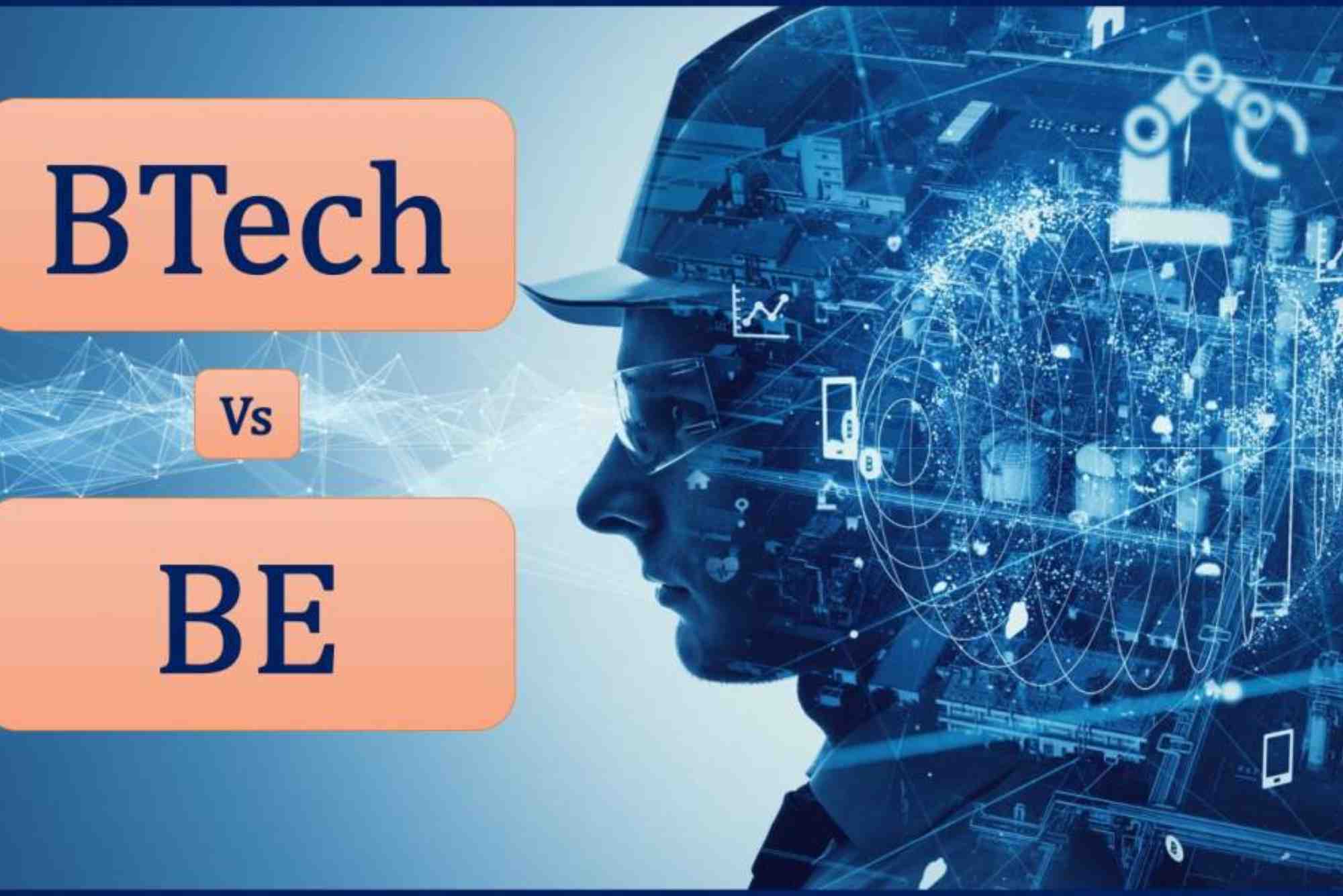
Choosing an undergraduate engineering degree can be confusing, especially when faced with two seemingly similar options — Bachelor of Engineering (BE) and Bachelor of Technology (BTech). While both degrees aim to produce skilled engineers, the difference between Bachelor of Engineering and Bachelor of Technology lies in the curriculum structure, learning approach, and career orientation.
In this guide, we’ll break down these differences, help you make an informed decision, and answer some of the most frequently searched questions.
Understanding BE and BTech
What is a Bachelor of Engineering (BE)?
A Bachelor of Engineering is an academic degree that emphasizes the theoretical foundations of engineering. It’s designed to build a strong conceptual understanding, preparing students for both industry and research roles. BE is commonly offered by universities and is often rooted in pure sciences and engineering principles.
What is a Bachelor of Technology (BTech)?
A Bachelor of Technology is a more application-oriented degree. It focuses on hands-on training, practical skills, and real-world problem-solving. BTech programs are generally offered by technical institutes such as the Indian Institutes of Technology (IITs) and emphasize technology and implementation.
Key Differences Between Bachelor of Engineering and Bachelor of Technology
Let’s explore the core differences that matter most to students and parents alike.
Curriculum Focus
- BE: Emphasizes engineering theory, mathematics, and physics.
- BTech: Emphasizes applied knowledge, labs, and project-based learning.
The difference between Bachelor of Engineering and Bachelor of Technology becomes clearer in how the curriculum is structured. BE leans toward analytical learning, while BTech focuses more on skill development.
Teaching Methodology
- BE: More lecture-driven, with focus on theory and conceptual clarity.
- BTech: More interactive, with workshops, case studies, and practical exposure.
BTech students often engage in internships and industrial training, which enhances their readiness for employment immediately after graduation.
Research vs. Application
- BE: Ideal for students interested in research and development.
- BTech: Better suited for those looking to enter the workforce quickly with technical skills.
Universities offering BE tend to have stronger research facilities, while BTech institutions are usually aligned with industry partnerships.
Duration and Structure
Both BE and BTech are typically four-year undergraduate degrees. However, the semester-wise distribution of practical and theory papers may vary slightly. BTech courses often include more industry projects and workshops starting from the second year.
Institutions Offering Each
- BE: Commonly offered by universities such as Anna University, Mumbai University, and Osmania University.
- BTech: Offered by technical institutes like IITs, NITs, and state-level engineering colleges.
In India, for example, IIT Bombay offers BTech, while University of Mumbai offers BE. This institutional distinction is another layer to understanding the difference between Bachelor of Engineering and Bachelor of Technology.
Global Recognition
Both degrees are recognized globally, but the acronym usage varies by country.
- In countries like Germany and Australia, the BE degree is more common.
- In countries like the USA and Canada, the equivalent degree is usually called Bachelor of Science in Engineering or BTech, depending on the university.
No matter which you choose, ensure the program is accredited by a recognized body such as ABET (USA) or NAAC (India).
Career Opportunities
| Career Path | Bachelor of Engineering (BE) | Bachelor of Technology (BTech) |
|---|---|---|
| R&D Jobs | ✅ Strong fit | ⚠️ Less focused |
| Software Roles | ✅ Preferred for logic skills | ✅ Practical coding skills |
| Government Exams | ✅ Popular choice | ✅ Equally accepted |
| Core Engineering | ✅ Theory-based prep | ✅ Industry-oriented |
| Startups | ⚠️ May lack agility | ✅ Entrepreneurial advantage |
Although there is no legal hierarchy between the two degrees, employers may prefer one over the other based on the job role.
How to Choose Between BE and BTech
Assess Your Career Goals
If you plan to go into academia, research, or pursue a master’s degree abroad, BE might align better with your goals. If your interest lies in launching a startup, joining tech companies, or building products, BTech could be the smarter choice.
Evaluate the Institution
Sometimes, the institution matters more than the degree title. An IIT BTech might hold more weight than a BE from a lesser-known university. Look into placement records, faculty profiles, alumni network, and accreditation status before deciding.
Consider Your Learning Style
- Do you enjoy solving equations, working on theoretical problems, and exploring how systems work? BE might suit you.
- Prefer tinkering, building prototypes, and coding apps? Then BTech is probably your path.
Common Myths Debunked
Myth 1: BTech is better than BE
Truth: Neither is inherently better. It depends on the institution, specialization, and your career plan.
Myth 2: BE is outdated
Truth: BE continues to produce top-tier researchers and engineers. Many global universities offer it as their primary engineering degree.
Myth 3: BTech is only for software roles
Truth: BTech graduates excel in mechanical, civil, and electrical fields too — especially when trained through labs and internships.
FAQs: People Also Ask
What is the main difference between BE and BTech?
The main difference lies in the approach to learning. BE is more theory-based, while BTech is practically oriented.
Is BTech more valuable than BE?
Not necessarily. Both degrees are recognized for engineering roles. What matters more is your performance, specialization, and the institution’s reputation.
Can BE students apply for software jobs?
Yes. Many BE students work in software engineering, especially those who learn coding, data structures, and algorithms on their own or through electives.
Which is better for government jobs, BE or BTech?
Both are accepted equally for competitive exams like GATE, UPSC, or PSU recruitments.
Can I pursue MTech after BE?
Absolutely. BE graduates are fully eligible to pursue MTech, MBA, or any post-graduate program that accepts engineering graduates.
In summary, the difference between Bachelor of Engineering and Bachelor of Technology lies in how each prepares you for the engineering world. BE is rooted in theory and research, while BTech focuses on hands-on training and practical application.
Choose the degree that aligns with your passion, learning style, and career goals. Ultimately, your skills, curiosity, and effort will define your success more than the degree title.